Tuesday, November 18, 2025

Wire Drawing Machines


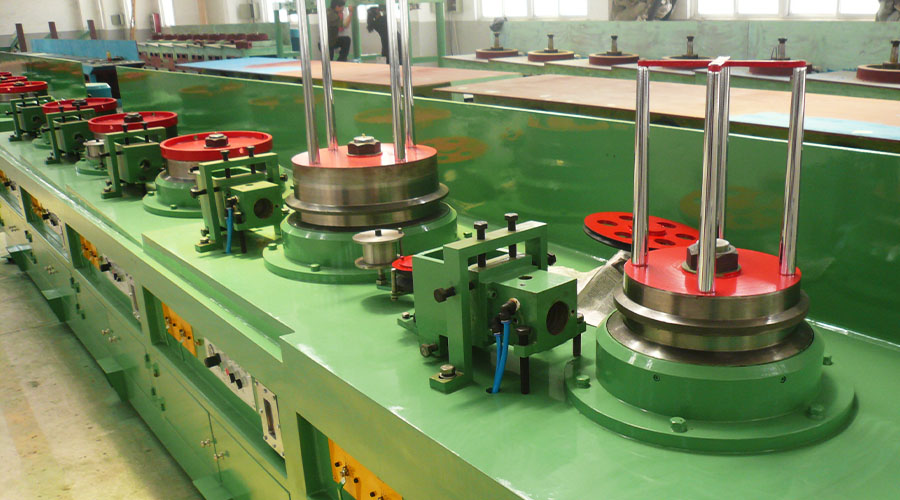
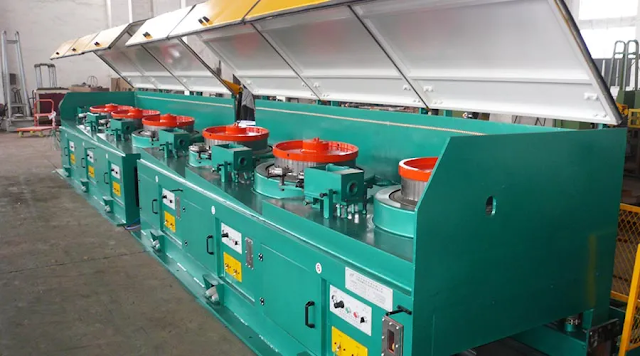
How Wire Drawing Machines and Galvanizing Equipment Work Together for High-Quality Metal Wire Production


Metal wire is an essential material in both daily life and industrial applications. From construction and industrial manufacturing to fencing and wire mesh products, high-quality metal wire is critical for a wide range of applications. Achieving the required wire specifications and durability relies on a combination of wire drawing machines and galvanizing equipment.


1. Wire Drawing Machines: Producing Precise Wire Specifications

Producing metal wire with consistent diameter, surface finish, and mechanical properties requires specialized wire drawing machines. Depending on production needs, machines can produce different wire gauges and lengths. Common types include:

  • Compound Straight-Through Wire Drawing Machines – high precision for medium-sized production runs

  • Fully Automatic Wire Drawing Machines – optimized for large-scale, continuous production

  • Continuous Multi-Die Wire Drawing Machines – suitable for long wire batches with minimal downtime

  • Water Bath Wire Drawing Machines – excellent for high-precision, fine wire production

Different machines offer varying production efficiency, output quality, and cost, allowing manufacturers to select solutions tailored to their operational requirements.


Wire Drawing Machines


2. The Necessity of Corrosion Protection

Wire drawn from these machines is typically bare metal and prone to corrosion if stored for extended periods. To ensure long-term durability, corrosion protection is essential. There are two primary methods:

a. Hot-Dip Galvanization (HDG)

The wire is dipped into molten zinc, forming a uniform and durable zinc coating. Hot-dip galvanization provides superior corrosion resistance for structural and outdoor applications.

b. Electro-Galvanization

Wire is coated with zinc using an electrochemical process. Electro-galvanizing equipment is often used for finer wires where precision coating thickness and uniformity are critical.

Galvanizing equipment can vary from standard plating machines to specialized wire galvanizing lines, including rolling galvanizers designed for continuous wire production. These specialized machines ensure seamless, high-quality zinc coatings even on fine or elongated wires, which standard galvanizers cannot achieve.


3. Integration of Wire Drawing and Galvanizing Equipment

The combination of wire drawing and galvanizing equipment is crucial for producing durable, high-quality metal wire. The process flow typically includes:

  1. Wire Drawing: Raw wire rods are drawn to the desired diameter and surface quality.

  2. Immediate Corrosion Protection: Freshly drawn wire is transferred to galvanizing lines to prevent oxidation and rust.

  3. Final Applications: Galvanized wire is then used in various products, such as:

    • Cable protective barriers

    • Welded wire mesh

    • Gabion mesh and stone cages

This integrated workflow ensures the wire maintains optimal mechanical strength while achieving superior corrosion resistance, essential for both industrial and construction applications.


4. Key Engineering Benefits

  • Precision and consistency: Wire drawing machines guarantee uniform wire diameter and mechanical properties.

  • Enhanced durability: Galvanizing the wire immediately after drawing protects it from rust, extending its service life.

  • Versatile applications: The combined technology supports a wide range of products, from fencing to industrial cable reinforcement.

  • High-efficiency production: Specialized machines minimize downtime and material waste, reducing overall production costs.


Wire Drawing Machine Pricing and Advanced Winding Control Solutions

Wire Drawing Machine


Wire Drawing Machine Pricing and Advanced Winding Control Solutions

In modern wire manufacturing, the winding stage of a wire drawing machine plays a critical role in determining both product quality and operational efficiency. For water bath wire drawing machines, the winding system is the core component of the control system, directly affecting wire surface quality, tension consistency, and final coil dimensions.


1. Winding Control Methods

The performance of a wire drawing machine heavily depends on precise control of the winding tension. There are three primary control strategies commonly used in the industry:

a. Tension Roller (Gravity-Based) Control

This method uses weighted tension rollers to regulate winding tension. It is simple, cost-effective, and easy to maintain. However, when the coil diameter changes significantly, tension may become uneven, potentially affecting coil uniformity and wire surface finish. This method is suitable for general-purpose wire drawing operations with moderate precision requirements.

b. Torque Control

Here, the winding tension is determined by the torque applied by the winding motor. Torque control provides more flexibility than gravity-based methods, but can lead to uneven tension as the coil diameter increases. For processes with moderate tension requirements, torque control offers a reasonable compromise between performance and cost.

c. PID Closed-Loop Control (Recommended for High-Precision Wire Drawing)

For high-precision water bath wire drawing machines, PID-based tension control using a variable frequency drive (VFD), such as the ABB ACS510, is highly recommended. This method automatically adjusts tension based on real-time coil diameter and winding speed, ensuring uniform wire tension, smooth coil formation, and reduced wire breakage.
Key advantages include:

  • Real-time tension correction with PID feedback

  • Consistent coil quality across different wire diameters

  • Minimized mechanical stress on the wire, reducing scrap rates

Wire Drawing Machine


2. Common Operational Issues and Troubleshooting

Despite advanced control systems, operators may still encounter common issues such as machine startup failure or wire breakage. Understanding the root causes is critical for minimizing downtime and improving productivity.

a. Machine Fails to Start

Potential causes include:

  • Control power is off: Ensure the main control switch is turned ON.

  • Machine not reset after previous stoppage: Press the reset button if the machine stopped due to a wire break.

  • Emergency stop engaged: Verify and release the emergency stop button.

  • VFD trip: Check the VFD display for fault codes. Turn off the main power for 30 seconds, then restart.

b. Wire Breakage

Wire breakage during drawing may be caused by:

  • Excessive drawing speed: Reduce the speed to match the wire’s tensile strength.

  • Wire quality issues: Defective wire, impurities, or inconsistencies require replacement with high-quality wire.

  • Lubricant problems: Deteriorated or insufficient lubricants increase friction, leading to wire breakage. Replace with fresh, appropriate wire drawing lubricant.


3. Engineering Recommendations

For manufacturers looking to optimize wire drawing processes:

  1. Adopt PID-controlled tension rollers for high-precision production to ensure consistent coil quality.

  2. Monitor and maintain lubricants regularly to prevent wire friction and reduce downtime.

  3. Ensure proper setup and machine resets to avoid unnecessary stoppages.

  4. Use high-quality wire materials to minimize breakage and improve surface finish.

By implementing these strategies, wire manufacturers can improve production efficiency, reduce scrap rates, and deliver high-quality wire products to meet international standards.

Monday, October 9, 2023

Variable-frequency Drive Wire Drawing Machine Application

Wire Drawing Machine


Variable-frequency Drive Wire Drawing Machine Application

1. Device Overview

The high-speed wire drawing machine is mainly used for drawing copper wire. Its main electrical transmission part consists of a drafting motor, a take-up motor, and a wire arrangement motor. 

Other auxiliary parts of the equipment include a swing bar (tension frame), positioning wheel, line dividing wheel, reciprocating wire arrangement rod, etc. 

The drafting motor drives the drawing wheel to operate. The four-stage drawing wheel is linked through the belt to realize metal stretching, and the take-up motor realizes winding. 

The equipment overview and functional requirements are as follows:

1.1 Basic parameters of equipment:

Product name: High speed thin wire drawing machine

Drafting motor (KW): 11/4P

Take-up motor (KW): 4/4P

Incoming wire diameter (mm): Φ0.6-1.20

Outlet wire diameter (mm): Φ0.08-0.32

Maximum mechanical speed (m/s): 2500(max)

Tension frame resistance value: 5KΩ

1.2 Technical specifications and requirements:

◎ Synchronization requirements when the equipment starts to increase speed;

◎ Keep the tension constant when the equipment is running;

◎ Synchronization is required when parking, without wire breakage or tension relaxation;

◎ Disconnection protection required for equipment safety production;

◎ Inching threading function

◎ External button starts operation;

◎ Running speed display;

◎ The diameter ratio of the winding empty disk to the full disk is about 1:3;

◎ Full plate weight is about 50kg;

◎The maximum operating frequency is about 70HZ.

2. System composition

◎ According to the equipment conditions, select the following models and components as electrical transmission equipment

INV1: Drafting VFD (Variable-frequency Drive) Sunwoele HSF600

INV2: Winding VFD (Variable-frequency Drive) Sunwoele HFV3000

Braking resistor: 1000W/80Ω

◎ The drafting motor adopts Sunwoele HSF600 VFD (Variable-frequency Drive), and the winding motor adopts HFV3000 winding-specific VFD (Variable-frequency Drive) (with external braking resistor)

The operation command and output frequency signal of the host INV1 is used as the operation command and frequency command of the slave INV2 to achieve synchronous operation.

◎ When parking, brake in the opposite direction for a heavy disc to prevent wire breakage caused by inertia.

◎ Use the JOG function to realize the jogging function during threading operations

◎ The pendulum output voltage signal is used as the feedback signal for internal variable PID correction control, and VFD (Variable-frequency Drive) unique winding curve is used for speed prediction graphic operation to achieve constant linear speed winding to meet process requirements.

◎ The pendulum output voltage signal is used as the feedback signal for internal variable PID correction control, and VFD (Variable-frequency Drive) unique winding curve is used for speed prediction graphic operation to achieve constant linear speed winding to meet process requirements.

3. Conclusion

During the entire working process of the high-speed thin wire drawing machine, the process requirements are mainly to maintain constant tension during winding. 

Especially during high-speed operation and rewinding, there are higher requirements for the acceleration and deceleration synchronization control of VFD (Variable-frequency Drive) and the control of the inertia of the rewinding wheel during deceleration and parking. 

After debugging and running, series VFD (Variable-frequency Drive) meets the user's process requirements during acceleration and deceleration operation, high-speed operation, and parking braking.

In order to meet the requirements for safe production, the disconnection protection function of the series VFD (Variable-frequency Drive), in addition to the normal set correction amount holding area, the winding VFD (Variable-frequency Drive) uses the frequency value given by INV1 As a reference value, the PID adjustment effect caused by the action of the tension frame is limited.

Tuesday, July 18, 2023

What is Enameled Wire?

Enameled Wire


What is Enameled Wire?


Enameled wire, also known as wound wire or coil insulated wire, is an insulating material widely used in the manufacture of electrical products. It must meet the requirements of various uses and manufacturing processes. These requirements include the shape and size of the enameled wire, and its ability to work at high temperatures for short and long periods of time. On some special occasions, the enameled wire needs to be able to withstand strong vibration and centrifugal force at high speed or withstand corona and breakdown under high voltage. In addition, enameled wires need to be able to withstand chemical corrosion under special atmospheric conditions.


In addition to the above physical performance requirements, the enameled wire also needs to be able to withstand mechanical stress such as stretching, bending, and abrasion during the manufacturing process. At the same time, in the process of dipping and drying, the enameled wire also needs to be able to withstand phenomena such as expansion and erosion.


According to the basic composition of enameled wire, conductive core wire, and electrical insulation layer, enameled wire can be classified. In general, enameled wires can be classified according to the insulating material used and the method of manufacture. For example, enameled wire, wound wire, enameled wire, and inorganic insulated wire are common classifications.


The manufacturing process of enameled wire is relatively complicated. First, the corresponding lacquer liquid is applied to the conductor, then the solvent is evaporated, and the lacquer film is cured and cooled. According to the different insulating enamel used, the enameled wire can be divided into various types, such as polyester enameled wire, polyester imide enameled wire, polyamide-imide enameled wire, polyimide enameled wire, etc. Sometimes, it is also classified according to the particularity of its use, such as self-adhesive enameled wire, refrigerant-resistant enameled wire, etc.


The earliest enameled wire is oily enameled wire, which is made of tung oil and so on. However, due to the poor abrasion resistance of the paint film, this type of enameled wire cannot be directly used to manufacture motor coils and windings. Therefore, it needs to be wrapped with cotton yarn when used. Later, the advent of polyvinyl formal enameled wire greatly improved its mechanical properties, so that it can be directly used in motor windings, known as high-strength enameled wire.


With the development of weak current technology, self-adhesive enameled wire appeared. This type of enameled wire does not require dipping and baking to obtain coils with better integrity. However, due to its poor mechanical strength, it can only be used in micro motors and small motors. In addition, in order to avoid the trouble of removing the paint film when soldering, a direct soldering enameled wire has been developed. In the high-temperature tin enameled bath, the paint film can fall off by itself, making the copper wire easy to fall off and solder.


Composite enameled wire is a new type of enameled wire developed in recent years. Its inner and outer paint films are composed of different polymer materials, such as polyetherimide/polyamide-imide enameled wire.


Wednesday, June 7, 2023

The Manufacturing Process of Cemented Carbide Wire Drawing Die

Carbide Wire Drawing Die


The Manufacturing Process of Cemented Carbide Wire Drawing Die


1. Mold Blank Processing

The core of the cemented carbide wire drawing die will shrink during the sintering process, and the amount of shrinkage varies greatly due to the difference in composition, pressing, and sintering process; due to the different shrinkage rates of each part of the mold blank, it often forms a "saddle" or "trumpet" shape. 

Although the fluctuation of the shape and size of the mold blank meets the mold standard, it far exceeds the interference requirement of the mold group, which leads to serious uneven prestress of the mold core during mold loading, and greatly reduces the service life of the mold. 

Therefore, the mold blank must be ground externally, and a special fixture must be used on the grinding machine to grind it with a diamond grinding wheel.


2. Interference Amount of Installation Settings

In order to obtain a certain prestress of the mold core during installation, the diameter of the inner hole of the mold sleeve should be smaller than the outer diameter of the mold core. 

The difference between the two is called the interference amount. 

The amount of interference should be determined according to the size and deviation of the mold core, the draft stress, and the method of the sleeve. 

There are two types of mold sets: hot pressing method and cold pressing method. The cold pressing method has a small interference and a small precompression stress. 

It is mostly used to make wire drawing dies with smaller specifications and draw soft metals.


3. Mold  Sleeve Processing

The molded sleeve is formed by turning on a lathe, and the control points during processing are as follows:

(1) The roughness of the inner diameter of the mold sleeve must reach 0.80-I.6m, which is conducive to close cooperation with the mold sleeve;

(2) The inner diameter of the mold sleeve should correspond to the outer diameter of the mold blank to ensure that the interference of each mold is accurate;

(3) The bottom surface of the inner hole of the mold sleeve must be parallel to the outer end surface of the mold, and ensure that it is perpendicular to the center line of the mold hole after installation;

(4) The ellipticity of the inner hole of the mold sleeve should be as small as possible, not more than 0.02mm. When hot-loading, the outer surface of the mold sleeve should be polished and smooth to ensure uniform cooling after installation.


4. Mounting Process

The cold press mounting process involves pressing the blank into a mold sleeve with a press at room temperature. 

The cold pressing method requires accurate interference between the mold core and the sleeve, and high dimensional accuracy. The advantage is that no heating equipment is required, which saves energy and reduces costs.

Wednesday, May 17, 2023

Automatic Wire Drawing Machine Use Precautions

Automatic Wire Drawing Machine


Precautions for the Use of Automatic Wire Drawing Machine


The automatic wire drawing machine is suitable for surface drawing and sweeping treatment of copper, iron, stainless steel, etc., and is widely used in various industries such as machinery, automobiles, and hardware parts. 

In order to help you use the automatic wire drawing machine correctly, YF Metal Tech summarizes some precautions for using the automatic wire drawing machine, let’s have a look together.


1. Before operating the automatic wire drawing machine, you need to check the power supply and keep it intact. The specific process of safe start-up of the automatic wire drawing machine is to connect the external power supply first, then turn on the main power switch of the equipment, and finally start the power switch of the equipment.


2. Make sure to check the exhaust port of the body motor before work, and make sure it is unobstructed.


3. Carry out a safety inspection on the automatic wire drawing machine before work, and let the wire drawing machine run idly. In addition, it is also necessary to check whether the fasteners of each part are loose to ensure safe production.


4. During the working process of the automatic wire drawing machine, you should always check whether the impeller and the motor connecting rod are loose, which is conducive to finding problems in time, and can work after adjustment, so as to ensure the safety of personnel in production.


5. When replacing the impeller of the automatic wire drawing machine, the power should be turned off first, and after the power is replaced, check whether the equipment is normal.


6. If it is found that the automatic wire drawing machine is working abnormally, it should stop working immediately and check the equipment. If the problem cannot be solved, find a maintenance worker in time for repair.


7. It is forbidden to extend any part of your body into the polishing area when the automatic wire drawing machine is working automatically to prevent injuries.


8. When the polishing machine is working, if there is an emergency, the main power switch should be turned off immediately.


9. At the working site of the automatic wire drawing machine, it is necessary to keep the ground clean and tidy, and not to place objects randomly.


10. The motor should be maintained regularly, and the bed dust should be cleaned every Saturday, and the motor should be maintained, so as to ensure the normal operation of the wire drawing machine equipment.


11. It is not allowed to randomly connect and pull wires at random. When cleaning or cleaning the equipment, water should be prevented from splashing on the power supply.


12. Non-staff personnel should not enter the work area without authorization to avoid danger.


The above content is organized by YF Metal Tech.


YF Metal Tech focuses on the R&D and manufacturing of wire drawing machines and polishing machines. Currently, it provides automatic wire drawing machines, planar wire drawing machines, plate wire drawing machines, water mill wire drawing machines, round tube wire drawing machines, stainless steel wire drawing machines, and other equipment. Welcome to consult.


Wednesday, April 26, 2023

Straight-in Wire Drawing Machine Applicable Standards

https://yfmetaltech.com/straight-in-wire-drawing-machine-applicable-standards/


Straight-in Wire Drawing Machine Applicable Standards


The straight-in wire drawing machine is a non-sliding way to draw medium and low carbon steel wire, stainless steel wire, molded steel wire, and non-ferrous metal wire coarse and medium diameter and developed equipment, suitable for standard parts industry, supermarket shelf production industry, steel wire to material processing enterprises.


The straight-in wire drawing machine mainly comprises frame, reducer box, reel, drop wire frame, carriage, pneumatic system, communication frequency control electric control system, and motor.


The reel is placed upside down in the lower part of the reduction box, and the drawn wire can be collected directly to the drop wire frame, and then the end of the large tray collects the wire again.


The drive system of the straight-in wire drawing machine uses a powerful narrow V-belt combination hardened gear reducer or oscillating ring reducer; the wire collecting plate is serious; the reel is forced air cooled; the pneumatic pressure wheel; the lower wire plate is independently driven and the diameter of the lower wire coil is adjustable; the communication frequency conversion speed control makes the machine easy to operate, safe and reliable, and saves more than 30% of energy.


Straight into the wire drawing machine in the motor through the pulley and three-stage gear drive, driving the reel placed on the reducer box rotation output shaft, traction wire end pulling.


After pulling the wire through the lead roller, into the drop wire frame, the drop wire frame and reel synchronous rotation.


The straight-in wire drawing machine is highly automated and can draw and collect wires together.


The wire collecting plate can be as large as 2 tons, easy and reliable to unload, simple operation, high production efficiency, safe, and reliable; it can be positively rotated and decontrolled when the whole machine is running, so as to avoid the formation of accidents by mistake; the appearance is neat and beautiful.


Tuesday, April 25, 2023

What is a Metal Drawing Machine?

Metal Drawing Machine


What is a Metal Drawing Machine?


YF Metal Tech Introduces the System Components of a Wire Metal Drawing Machine

◎ The following models and components are selected as electrical transmission equipment for the wire metal drawing machine situation

INV1: Draw frequency converter S011Z3

INV2: Winding frequency converter S004G3

Braking resistor: 1000W/70Ω

S011Z3 inverter for the drawing motor and S004G3 inverter for the winding motor (with external braking resistor)

Synchronous operation by using the operation command and output frequency signal of the main machine INV1 as the operation command and frequency command of the slave machine INV2

◎ When stopping, reverse direction braking is used to prevent wire breakage caused by inertia for heavy full reels

◎ JOG function to realize the pointing function during the threading operation

◎ Internal variable PID complementary control using the pendulum output voltage signal as a feedback signal Speed prediction graphic operation with the unique winding curve of the Sanchip inverter series to achieve constant wire speed winding and meet process requirements.

◎ Internal variable PID correction control with the pendulum output voltage signal as the feedback signal, and speed prediction graph operation with the unique winding curve of inverter series, to achieve constant line speed winding and meet the process requirements.

YF Metal Tech’s main products are drying boxes, pay-off equipment, wire drawing machines, linear wire drawing machines, cleaning machines, winding machines, annealing furnaces, rewinding machines, flip-top water tank drawing machines, baling machines, and double twisting machines.

Year-round for stainless steel and carbon steel extension enterprises to undertake technical transformation and complete sets of equipment manufacturing.


Friday, March 10, 2023

What is Cast Iron?

What is Cast Iron


What is Cast Iron?


The material consists of iron with more than 2% of carbon.

Cast iron is a very wide range of consumer as well as commercial applications.


Types of Cast Iron


1. Gray Cast Iron

Most common consists of small fractures of a graphite micro-structure which is responsible for creating the appearance of a gray color.

The gray cast iron offers various compressive strengths as steel. This as a result makes it a popular choice for metal applications that can involve compressive strength.


2. White Cast Iron

It has an off-white color, which in turn results in iron compounds that are known as cementite.

White cast iron is known to be hard, so having excellent resistance against abrasions.


3. Ductile Cast Iron

Also known as nodular cast iron it is a type of soft, ductile iron alloy accompanied by a high carbon content.

Its graphite is in the form of very tiny nodules that are accompanied with the graphite in the form of concentric layers which forms the nodules.

The properties are similar to the malleable iron, whereas the parts can be cast with larger sections.


4. Malleable Cast Iron

Created by using the heat treatment processes on the white cast iron.

As a result, the carbon in iron carbide is found to transform into either graphite or ferrite plus carbon.

The slow process forms spheroidal particles instead of flakes.

The properties of malleable cast iron are likely to be those of mild steel.


5. Alloy Cast Iron

The properties of the cast iron are changed by adding various alloying elements.


Thursday, March 9, 2023

Technical Progress Of High Speed Wire Rod Rolling Mill

Wire Rod Rolling Mill


Technical Progress Of High Speed Wire Rod Rolling Mill


Technical progress of high-speed wire rod rolling mill as followings: 


1) Continuous, torsionless and high-speed rolling. Roughing rolling and intermediate rolling are arranged alternately, and pre-finishing rolling is installed in front of the finishing mill. The maximum final rolling speed is designed to reach 120 m/s. 

According to the latest production practice, the maximum rolling speed will be guaranteed according to different specifications of wire rods. For example, in 2010, Siemens Austria Steel United Corporation (Morgan Company was annexed by the company) designed and manufactured high-speed for Xuanhua Iron and Steel Company. The guaranteed final rolling speed of the wire rod rolling mill is small wire rod Φ5.5-7.5 mm | 112 m/s, Φ5mm | 105 m/s for medium and 85 m/s for small diameter 6 mm quenched threaded steel. 

Improving the finishing rolling speed of the wire rod mill is a systematic project. It involves not only the main rolling mill machinery and electrical equipment but also the number of finishing mills, the rack spacing, and the cooling system. It does not affect the mechanical properties of products because of the high finishing rolling speed and the high finishing rolling temperature. 

It also requires supporting equipment such as a spinning machine and flying shear to withstand the high-speed impact of wire rods. 

2) Adding reducing and sizing equipment to improve product accuracy and solve the temperature control problem in the wire rod finishing rolling process.

3) Increasing the cross-section of the feed billet can not only meet the need for an upstream continuous caster to improve the productivity and quality of the billet but also increase the coil weight and increase the productivity and yield of the wire rod rolling mill.

4) The qualified billet is heated and soaked directly into the heating furnace through the hot charging roller. The hot charging temperature can reach over 600 C, which improves the productivity of the heating furnace, reduces the energy consumption during billet heating and the loss of oxide scale during billet cooling and heating, and improves the metal yield.

5) Low-temperature rolling. The starting rolling temperature is controlled at 950 C. The stiffness of the mill stand and the capacity of the main motor can meet this requirement in order to achieve overall energy savings and reduce metal burning.

6) Controlled cooling and temperature rolling.

7) Single-pass system. All products (small 5.0-25mm) only need to change rollers on four reducing and sizing mills, and no rollers need to be changed for other mills, thus significantly improving the productivity and productivity.

8) The latest generation of spinning machines and winding stations. In the form of asymptotic bending, the ideal trajectory of wire moving in the spinning tube is given, so that the wear of the spinning tube can be reduced and the running stability can be achieved.

Tuesday, March 7, 2023

The 90m High-Speed Wire Rod Rolling Line Project In Ethiopia Start Production


90m High-Speed Wire Rod Rolling Line


The 90m High-Speed Wire Rod Rolling Line Project In Ethiopia Start Production


December,13th,2016, the 90m high-speed wire rod rolling line project in Ethiopia contracted and constructed by Hani Tech has been put into production at 10 am local time. This means the whole rolling project and all the steel rolling mills it contains customized for SHENZHEN STELL with an annual capacity of 300,000 tons have been officially accomplished and transferred.

This whole project of a wire rod rolling production line with an annual capacity of 300,000 tons only takes WEIKEDUO less than a year to construct, which seems really miraculous for it could cost 3 years of construction for a complex project like this. As an experienced professional manufacturer of metallurgical types of machinery like monoblock mills, hot rolling mills, flying shears, and other associated equipment, WEIKEDUO has dedicated itself to developing and providing advanced and durable machinery equipment for all our clients around the world.

This brand new rolling line in Ethiopia will provide more job opportunities for local people and government while it would also boost the local economy vigorously. The present Director of Investment from the Ethiopian government, Fitsum, has once again declared the fact that the Ethiopian government will encourage and support all Chinese companies with competitive advantages and good faith to invest and develop in Ethiopia as always. And they will provide a solid foundation for all these companies to grow.

The deputy director of the Eastern Industry Zone, Jiao Yongshun, has also congratulated the success of the project and indicated that this rolling project could be another achievement to our current One Belt and One Road Initiative.


Wire Rod Rolling Line

Sunday, March 5, 2023

The Additional Processing Steps In The Manufacture Of Cold Rolled Sheets

Cold Rolled Sheets


The Additional Processing Steps In The Manufacture Of Cold Rolled Sheets


The cold-reduced coil, as it exists, is very hard and possesses very limited applicability. It is very stiff and exhibits high amounts of spring back when bent. Therefore, this steel must be annealed (heated to high temperatures) to soften it and make it useful.

During the process of heating, the steel will be soft and can subsequently be used for a multitude of applications. Continuous annealing involves passing the steel through a high-temperature furnace in the form of a continuous ribbon. That is to say, the coil is fed from a payoff reel into the furnace. It reaches a high temperature when its passage through the furnace. The steel sheet cooled, and recoiled at the exit end of the furnace.

Whether the steel is batch annealed or continuously annealed, the specific properties of the steel sheet, after annealing, depend on the steel chemistry, the temperatures used during hot rolling, the amount of cold reduction, and the annealing cycle (time and temperature).

Whichever method of annealing is used, the steel is maintained under a protective (non-oxidizing) atmosphere using hydrogen and nitrogen to prevent oxidizing the steel while it is at high temperature. Furthermore, to prevent oxidation, the protective atmosphere is designed to clean the steel by breaking down the oils that are present after cold rolling and entraining the oil vapors in the hydrogen/nitrogen gases that are passed through the furnace.


Friday, March 3, 2023

The Adjustment Of Steel Rolling Mill

Steel Rolling Mill


The Adjustment Of Steel Rolling Mill


Before the steel rolling mill is used, the roll pass, controlling plate shape, and backup roll should be adjusted according to the requirement; and the fixed position of the rolls in the rolling mill should be maintained. The workload of the rolling bearing is heavy and varies greatly, so the friction coefficient of the bearing is required to be small. After determining the product rolled by the rolling mill, the line speed of the rolling mill can be basically determined. The hardness of the raw materials is measurable. The rolling stock of the rolling mill is determined by changing the plastic deformation size.

Usually, the newly installed steel rolling mill has a running-in process. During the running-in process, the rolls are operated in a second operation, and the operation speed is 50%, 65%, 75%, and 85%. Different steel rolling mill models use rolls with different materials and specifications for different rolling products.

After the steel rolling mill is installed, the gears of the reducer and the gearbox need to have meshed, the rolling speed is too fast, and the torque is enhanced. After the normal operation of the rolling mill for 30 days, stop the rolling mill and check the meshing of the large and small gears, and waits for everything to be normal, the rolling speed can be increased.

Under normal circumstances, it is not necessary to adjust the rolling speed. The rolls in the steel rolling mill are constantly worn during the running process. In order to keep the rolling mill stable in the controlled rolling requirements, the roll must be repaired in time, and the rolls need to be replaced in serious cases.

The steel rolling mill needs labor, even the automated equipment needs to be monitored manually in the console. The conveyor roller and shearing machine located in the automatic rolling mill must be strictly controlled during operation to avoid the failure of stacking steel or jamming. If the wear of roll and guide exceeds the specified range, it needs to be replaced.

The rolling of the billet causes the roll to be squeezed instantaneously, and the bearing is subjected to correspondingly high pressure, thereby affecting the product size of the rolled steel. We may also need to make in-depth improvements, but the ultimate goal is to get better steel rolling mill equipment.


Wednesday, March 1, 2023

The Advantages And Disadvantages Of Electric Arc Furnace

Electric Arc Furnace


The Advantages And Disadvantages Of Electric Arc Furnace


There are several essential elements that caused the evolution of the electric arc furnace:

1) The increasing quantity of scrap steel;

2) The rapid development of the entire steel industry. The supply and the price of electricity become stable, which makes it possible to generalize the arc furnace;

3) The arc furnace tends to be larger and more powerful;

4) Less investment, quick to construct, and fast cost recovery;

5) The temperature and the component of the molten steel can be controlled with accuracy. The arc furnace can also smelt various kinds of different steels.


Compared with others, the electric arc furnace also has several obvious advantages:

1) The arc furnace can heat the furnace and the steel up to 4000-6000℃ directly and smelt special steels that contain refractory elements like W and Mo.

2) The arc furnace could remove the toxic gases and the inclusions while deoxidizing and desulfurating.

3) High flexibility. The arc furnace is capable of engaging production continuously or intermittently.


Currently, owing to the development of related technologies, the electric arc furnace could be well-integrated with traditional steel-making processes. But there are also several deficiencies that need to be improved:

(1) The arc can only generate point-like heating sources, which will cause uneven heat distribution in the furnace.

(2) The arc will react with the furnace gases and vapor and release large quantities of H2 and N2.

With further improvement of the electric arc furnace, new smelting techniques will embrace a brighter prospect.


Monday, February 27, 2023

The Advantages Of Induction Furnace

Induction Furnace


The Advantages Of Induction Furnace


According to Wikipedia, the induction furnace is an electrical furnace in which the heat is applied by induction heating of metal. Induction furnace capacities range from less than one kilogram to one hundred tons capacity and are used to melt iron and steel copper, aluminum, and precious metals.


Heating fast, high temperature, easy operation and control, and the less pollution

It is an electric furnace for heating a material using an induced current generated by an induction coil. The material will be placed in a crucible made of refractory material if the metal material is heated. If the non-metallic material is heated, the material is placed in a graphite crucible. Furthermore, the induced current frequency will be corresponding to the increase and result in increased heat when the AC frequency is increased. Induction furnace heating fast, high temperature, easy operation and control, and less pollution of material in the heating process to ensure a high-quality product.


Clean, Energy-efficient

The advantage of the induction furnace is a clean, energy-efficient and well-controllable melting process compared to most other means of metal smelting. Most modern foundries use this type of furnace, and now also more iron foundries are replacing cupolas with induction furnaces to melt cast iron, as the former emit lots of dust and other pollutants.


Uniform heating, small table temperature difference, high accuracy of temperature control

The reason why the uniform heating and the small core table temperature difference is simply because of heat generated in the workpiece itself. And the application of the temperature control system can achieve precise control of the temperature to improve product quality and pass rate.

In addition, the medium frequency induction furnace heating device has the advantages of small volume, light weight, high efficiency, excellent quality of hot processing, and environment-friendly. It rapidly replaces the coal-fired stove, gas stove, fuel stove, and ordinary resistance furnace, which is a new generation of metal heating equipment.


Saturday, February 25, 2023

Stainless Steels

Stainless Steels


Stainless Steels


Stainless steels are selected in accordance with their corrosion resistance. They have been used for almost more than 100 years cause of their durability, appearance, and cleanability. These things can be found in your home, prestigious buildings, transport, food, and beverage handling, chemical plant, and medical equipment.

Chromium is one of the essential elements of stainless steel, which makes it has stainless characteristics, but most commonly the used grade is type 304, containing 8% nickel. Furthermore, it is one of a family of grades known as “austenitic”. They are featured with good ductility as well as ease of forming and welding. Because it is maintained at very low temperatures, so they can be selected for cryogenic applications. While some grades retain their properties to high temperatures as well. 

Nickel is an important alloying element in all the commercial grades of the duplex stainless steel family. These have higher strength than the common austenitic grades but cannot be used over such a wide temperature range. Nevertheless, they are finding increasing use in structural applications where strength is important.

Some grades within the other families of stainless steels - ferritic, martensitic, and precipitation hardening - do contain a small percentage of nickel which enhances their properties.

Stainless steel is the largest single first use of nickel, accounting for 60.9% of nickel production in 2009. In the same period, 58.3% of the stainless steel was melted with chromium-nickel austenitic grades.


Thursday, February 23, 2023

The Device Of the Electric Arc Furnace

Electric Arc Furnace


The Device Of the Electric Arc Furnace


Electric Arc Furnace

An electric arc furnace consists of a shell, spout, cover(optional), furnace wall, bottom electrode device, and tilting system.

The furnace shell is water cooling style, the furnace side has a spout, the furnace inside wall has refractory, water cooling electrode style, temperature testing, and the spout was made by refractory.


Electrode Lifting Device

Electrode lifting device includes a conductive arm, lifting pole column, guiding column, electrode clamp, and lifting reduction box device.

Electrode clamps of conductive arms use non-magnetic conductive stainless steel, high mechanic, high wear resistance, deep hole, water cooling inside and cooling directly, and enhance the cooling effect, prolong the operational life span.


Large Current

Large current includes DC power supply compensator, copper bar, furnace body electrode connector, eliminator supply cable connector, big section cable, conductive arm, electrode clamp, and graphite electrode.


Water Cooling

The water cooling system is composed of the current switch, water distributor, return line, water cooling pressure less than 2XlO5Pa, and water cooling temperature below 32℃, this device has flow warning, it alarms when the flow is below the related value.


Tuesday, February 21, 2023

The Application Of Flying Shear

Flying Shear


The Application Of Flying Shear


The Flying Shear is a common industrial application in rolling mill production lines for cutting a product into smaller lengths, without stopping the line, this means that the main production process is not interrupted, and so machine productivity is maximized.

The cutting tool is typically mounted on a carriage that moves either parallel to the product flow or at an angle across the product flow. The flying shear drive accelerates the carriage to synchronize with the line speed, while synchronized the cut is done and the carriage then decelerates and returns to its original position ready to cut again. There are also many other similar applications where a carriage must be synchronized at line speed and most of these can also be accommodated using the flying shear application software.

Typical applications include various types of cut-to-length machines, depositors, punches, product inspection, or any other process where synchronization at line speed is required.

A machine extrudes plastic pipes that must be supplied to the customer in pre-cut lengths. The extrusion process requires the extruder to run at a continuous speed to maintain the quality of the product. The pipe is uniform along its length and provided the length is within a set tolerance then the pipe is fit for sale. The flying shear is used to cut the product cyclically.

The actual design of the machine that we observed in the mill was very large in size and it cut the hot billets of diameter 1\2 inch to 1 inch and length will be in several meters and it cost thousands of dollars we cannot make this machine as FYP. So according to the situation, we had to design a machine of a small size to cut something other than a hot billet. We chose the design of the printer as a model as the design idea was similar to the printer and select copper wire as a job. The sketch will be shown below.


Flying Shear

Sunday, February 19, 2023

The Cold Rolling Mill

Cold Rolling Mill

The Cold Rolling Mill


In the article How Many Types of Rolling mill, we know that rolling is divided into two types that are hot rolling and cold rolling according to the different temperatures when metal is rolled. If the temperature is above its recrystallization temperature, then this kind of process is known as hot rolling. If the temperature is below its recrystallization temperature when mentally rolled, the process is called cold rolling.

While this article mainly talks about cold rolling. Cold rolling is fulfilled by making steel strips through plenty of tandem rolling mill stands. And each one of the stands has vertically stacked rolls that are powered by a huge motor to impart high compressive stresses into the strip. While hot rolling, pickled coils fed into the cold rolling mill from an entry-end reel and progressively reduced in thickness in each stand, to achieve the final desired thickness, as the strip exits the last stand. After the last stand, the strip recoiled. At this step, the strip is highly cold and not very useful for most applications. It needs to be annealed to soften the steel and make it more formable. 

Another method of cold reduction needs to use of a reversing mill. In this process, the strip is passed back and forth between mandrels on each side of a single or two-stand mill. The strip is reduced in thickness on each pass until the final required thickness is attained. The typical percent cold reduction ranges from 60 to 80 percent; such reducing a hot rolled strip of 0.100-inch thick to a 0.030-inch thickness results in 70 percent cold reduction.

Friday, February 17, 2023

The Concept And Process Of Rolling Mill

Process Of Rolling Mill


The Concept And Process Of Rolling Mill


Steel is widely used in our daily lives and holds a critical position in the national economy and most of the steel products we need are produced by rolling mills. The rolling process plays an important role as the final link of the steel-making process in modern steel enterprises.

Steel rolling, as its name, is a process of shaping the steel billet with rollers. And the rolling mill is what you need to get the job done. The complete rolling production process contains a series of different rolling techniques and it can be complicated. However, despite all those various requirements, the basic production process always contains the following procedures: reheating the steel billet and further treatments, rolling process, and the final finishing rolling process.

When the billets arrive, they need to be treated with chemicals like acids to remove the oxidation film and the obvious defects on the surface must be removed too. Then the billets will be reheated to a certain temperature to be ready for the coming rolling process. The rolling process is the core of this whole production, the billets will be rolled into different shapes and the rolling technique is crucial for the quality of the final product. It must meet the requirements from three different aspects: the product’s geometry dimension accuracy, internal organization, and performance, and clean and smooth surface. 

After all these processes, the product still has a complicated finishing rolling process. As a guarantee of the product, the finishing process can be different for the various requirements and standards. After the cooling, straightening, heat treatment, and other certain process procedures, the final product will meet all those customized requirements.


Featured Post

Bar & Wire Rod Rolling Mill Production Line Process Flow (Complete Version)

Bar & Wire Rod Rolling Mill Production Line Process Flow (Complete Version) 1. Bar Rolling Mill Production Line Process Flow  Billet acc...

Popular Articles

My Blog List

Wikipedia

Search results