Showing posts with label Wire Drawing Machine. Show all posts

Tuesday, November 18, 2025

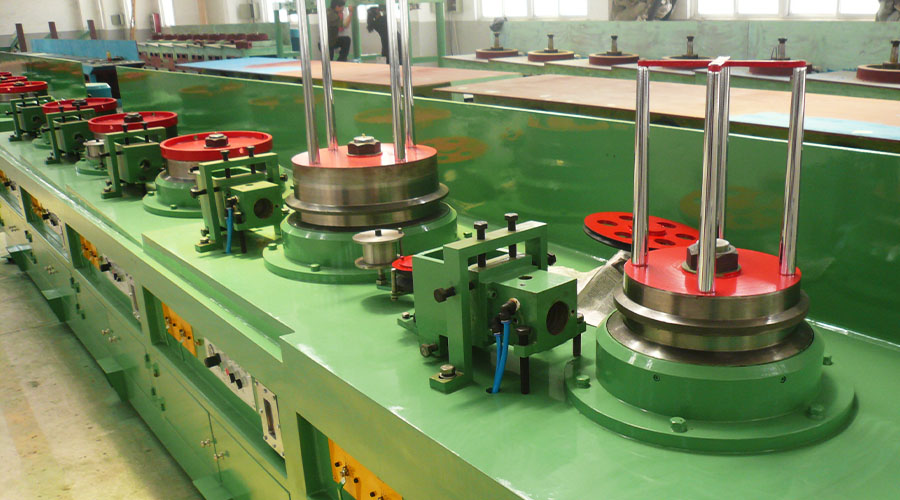
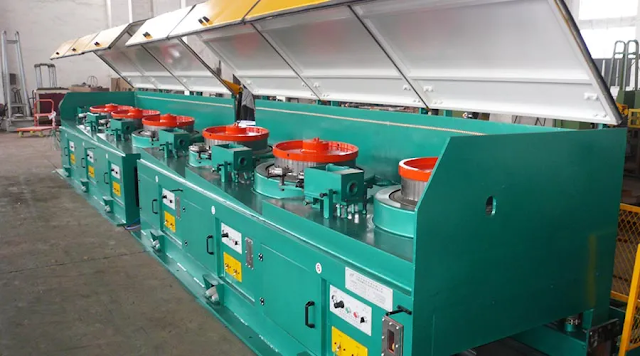
Wire Drawing Machines


How Wire Drawing Machines and Galvanizing Equipment Work Together for High-Quality Metal Wire Production


Metal wire is an essential material in both daily life and industrial applications. From construction and industrial manufacturing to fencing and wire mesh products, high-quality metal wire is critical for a wide range of applications. Achieving the required wire specifications and durability relies on a combination of wire drawing machines and galvanizing equipment.


1. Wire Drawing Machines: Producing Precise Wire Specifications

Producing metal wire with consistent diameter, surface finish, and mechanical properties requires specialized wire drawing machines. Depending on production needs, machines can produce different wire gauges and lengths. Common types include:

  • Compound Straight-Through Wire Drawing Machines – high precision for medium-sized production runs

  • Fully Automatic Wire Drawing Machines – optimized for large-scale, continuous production

  • Continuous Multi-Die Wire Drawing Machines – suitable for long wire batches with minimal downtime

  • Water Bath Wire Drawing Machines – excellent for high-precision, fine wire production

Different machines offer varying production efficiency, output quality, and cost, allowing manufacturers to select solutions tailored to their operational requirements.


Wire Drawing Machines


2. The Necessity of Corrosion Protection

Wire drawn from these machines is typically bare metal and prone to corrosion if stored for extended periods. To ensure long-term durability, corrosion protection is essential. There are two primary methods:

a. Hot-Dip Galvanization (HDG)

The wire is dipped into molten zinc, forming a uniform and durable zinc coating. Hot-dip galvanization provides superior corrosion resistance for structural and outdoor applications.

b. Electro-Galvanization

Wire is coated with zinc using an electrochemical process. Electro-galvanizing equipment is often used for finer wires where precision coating thickness and uniformity are critical.

Galvanizing equipment can vary from standard plating machines to specialized wire galvanizing lines, including rolling galvanizers designed for continuous wire production. These specialized machines ensure seamless, high-quality zinc coatings even on fine or elongated wires, which standard galvanizers cannot achieve.


3. Integration of Wire Drawing and Galvanizing Equipment

The combination of wire drawing and galvanizing equipment is crucial for producing durable, high-quality metal wire. The process flow typically includes:

  1. Wire Drawing: Raw wire rods are drawn to the desired diameter and surface quality.

  2. Immediate Corrosion Protection: Freshly drawn wire is transferred to galvanizing lines to prevent oxidation and rust.

  3. Final Applications: Galvanized wire is then used in various products, such as:

    • Cable protective barriers

    • Welded wire mesh

    • Gabion mesh and stone cages

This integrated workflow ensures the wire maintains optimal mechanical strength while achieving superior corrosion resistance, essential for both industrial and construction applications.


4. Key Engineering Benefits

  • Precision and consistency: Wire drawing machines guarantee uniform wire diameter and mechanical properties.

  • Enhanced durability: Galvanizing the wire immediately after drawing protects it from rust, extending its service life.

  • Versatile applications: The combined technology supports a wide range of products, from fencing to industrial cable reinforcement.

  • High-efficiency production: Specialized machines minimize downtime and material waste, reducing overall production costs.


Wire Drawing Machine Pricing and Advanced Winding Control Solutions

Wire Drawing Machine


Wire Drawing Machine Pricing and Advanced Winding Control Solutions

In modern wire manufacturing, the winding stage of a wire drawing machine plays a critical role in determining both product quality and operational efficiency. For water bath wire drawing machines, the winding system is the core component of the control system, directly affecting wire surface quality, tension consistency, and final coil dimensions.


1. Winding Control Methods

The performance of a wire drawing machine heavily depends on precise control of the winding tension. There are three primary control strategies commonly used in the industry:

a. Tension Roller (Gravity-Based) Control

This method uses weighted tension rollers to regulate winding tension. It is simple, cost-effective, and easy to maintain. However, when the coil diameter changes significantly, tension may become uneven, potentially affecting coil uniformity and wire surface finish. This method is suitable for general-purpose wire drawing operations with moderate precision requirements.

b. Torque Control

Here, the winding tension is determined by the torque applied by the winding motor. Torque control provides more flexibility than gravity-based methods, but can lead to uneven tension as the coil diameter increases. For processes with moderate tension requirements, torque control offers a reasonable compromise between performance and cost.

c. PID Closed-Loop Control (Recommended for High-Precision Wire Drawing)

For high-precision water bath wire drawing machines, PID-based tension control using a variable frequency drive (VFD), such as the ABB ACS510, is highly recommended. This method automatically adjusts tension based on real-time coil diameter and winding speed, ensuring uniform wire tension, smooth coil formation, and reduced wire breakage.
Key advantages include:

  • Real-time tension correction with PID feedback

  • Consistent coil quality across different wire diameters

  • Minimized mechanical stress on the wire, reducing scrap rates

Wire Drawing Machine


2. Common Operational Issues and Troubleshooting

Despite advanced control systems, operators may still encounter common issues such as machine startup failure or wire breakage. Understanding the root causes is critical for minimizing downtime and improving productivity.

a. Machine Fails to Start

Potential causes include:

  • Control power is off: Ensure the main control switch is turned ON.

  • Machine not reset after previous stoppage: Press the reset button if the machine stopped due to a wire break.

  • Emergency stop engaged: Verify and release the emergency stop button.

  • VFD trip: Check the VFD display for fault codes. Turn off the main power for 30 seconds, then restart.

b. Wire Breakage

Wire breakage during drawing may be caused by:

  • Excessive drawing speed: Reduce the speed to match the wire’s tensile strength.

  • Wire quality issues: Defective wire, impurities, or inconsistencies require replacement with high-quality wire.

  • Lubricant problems: Deteriorated or insufficient lubricants increase friction, leading to wire breakage. Replace with fresh, appropriate wire drawing lubricant.


3. Engineering Recommendations

For manufacturers looking to optimize wire drawing processes:

  1. Adopt PID-controlled tension rollers for high-precision production to ensure consistent coil quality.

  2. Monitor and maintain lubricants regularly to prevent wire friction and reduce downtime.

  3. Ensure proper setup and machine resets to avoid unnecessary stoppages.

  4. Use high-quality wire materials to minimize breakage and improve surface finish.

By implementing these strategies, wire manufacturers can improve production efficiency, reduce scrap rates, and deliver high-quality wire products to meet international standards.

Monday, October 9, 2023

Variable-frequency Drive Wire Drawing Machine Application

Wire Drawing Machine


Variable-frequency Drive Wire Drawing Machine Application

1. Device Overview

The high-speed wire drawing machine is mainly used for drawing copper wire. Its main electrical transmission part consists of a drafting motor, a take-up motor, and a wire arrangement motor. 

Other auxiliary parts of the equipment include a swing bar (tension frame), positioning wheel, line dividing wheel, reciprocating wire arrangement rod, etc. 

The drafting motor drives the drawing wheel to operate. The four-stage drawing wheel is linked through the belt to realize metal stretching, and the take-up motor realizes winding. 

The equipment overview and functional requirements are as follows:

1.1 Basic parameters of equipment:

Product name: High speed thin wire drawing machine

Drafting motor (KW): 11/4P

Take-up motor (KW): 4/4P

Incoming wire diameter (mm): Φ0.6-1.20

Outlet wire diameter (mm): Φ0.08-0.32

Maximum mechanical speed (m/s): 2500(max)

Tension frame resistance value: 5KΩ

1.2 Technical specifications and requirements:

◎ Synchronization requirements when the equipment starts to increase speed;

◎ Keep the tension constant when the equipment is running;

◎ Synchronization is required when parking, without wire breakage or tension relaxation;

◎ Disconnection protection required for equipment safety production;

◎ Inching threading function

◎ External button starts operation;

◎ Running speed display;

◎ The diameter ratio of the winding empty disk to the full disk is about 1:3;

◎ Full plate weight is about 50kg;

◎The maximum operating frequency is about 70HZ.

2. System composition

◎ According to the equipment conditions, select the following models and components as electrical transmission equipment

INV1: Drafting VFD (Variable-frequency Drive) Sunwoele HSF600

INV2: Winding VFD (Variable-frequency Drive) Sunwoele HFV3000

Braking resistor: 1000W/80Ω

◎ The drafting motor adopts Sunwoele HSF600 VFD (Variable-frequency Drive), and the winding motor adopts HFV3000 winding-specific VFD (Variable-frequency Drive) (with external braking resistor)

The operation command and output frequency signal of the host INV1 is used as the operation command and frequency command of the slave INV2 to achieve synchronous operation.

◎ When parking, brake in the opposite direction for a heavy disc to prevent wire breakage caused by inertia.

◎ Use the JOG function to realize the jogging function during threading operations

◎ The pendulum output voltage signal is used as the feedback signal for internal variable PID correction control, and VFD (Variable-frequency Drive) unique winding curve is used for speed prediction graphic operation to achieve constant linear speed winding to meet process requirements.

◎ The pendulum output voltage signal is used as the feedback signal for internal variable PID correction control, and VFD (Variable-frequency Drive) unique winding curve is used for speed prediction graphic operation to achieve constant linear speed winding to meet process requirements.

3. Conclusion

During the entire working process of the high-speed thin wire drawing machine, the process requirements are mainly to maintain constant tension during winding. 

Especially during high-speed operation and rewinding, there are higher requirements for the acceleration and deceleration synchronization control of VFD (Variable-frequency Drive) and the control of the inertia of the rewinding wheel during deceleration and parking. 

After debugging and running, series VFD (Variable-frequency Drive) meets the user's process requirements during acceleration and deceleration operation, high-speed operation, and parking braking.

In order to meet the requirements for safe production, the disconnection protection function of the series VFD (Variable-frequency Drive), in addition to the normal set correction amount holding area, the winding VFD (Variable-frequency Drive) uses the frequency value given by INV1 As a reference value, the PID adjustment effect caused by the action of the tension frame is limited.

Wednesday, May 17, 2023

Automatic Wire Drawing Machine Use Precautions

Automatic Wire Drawing Machine


Precautions for the Use of Automatic Wire Drawing Machine


The automatic wire drawing machine is suitable for surface drawing and sweeping treatment of copper, iron, stainless steel, etc., and is widely used in various industries such as machinery, automobiles, and hardware parts. 

In order to help you use the automatic wire drawing machine correctly, YF Metal Tech summarizes some precautions for using the automatic wire drawing machine, let’s have a look together.


1. Before operating the automatic wire drawing machine, you need to check the power supply and keep it intact. The specific process of safe start-up of the automatic wire drawing machine is to connect the external power supply first, then turn on the main power switch of the equipment, and finally start the power switch of the equipment.


2. Make sure to check the exhaust port of the body motor before work, and make sure it is unobstructed.


3. Carry out a safety inspection on the automatic wire drawing machine before work, and let the wire drawing machine run idly. In addition, it is also necessary to check whether the fasteners of each part are loose to ensure safe production.


4. During the working process of the automatic wire drawing machine, you should always check whether the impeller and the motor connecting rod are loose, which is conducive to finding problems in time, and can work after adjustment, so as to ensure the safety of personnel in production.


5. When replacing the impeller of the automatic wire drawing machine, the power should be turned off first, and after the power is replaced, check whether the equipment is normal.


6. If it is found that the automatic wire drawing machine is working abnormally, it should stop working immediately and check the equipment. If the problem cannot be solved, find a maintenance worker in time for repair.


7. It is forbidden to extend any part of your body into the polishing area when the automatic wire drawing machine is working automatically to prevent injuries.


8. When the polishing machine is working, if there is an emergency, the main power switch should be turned off immediately.


9. At the working site of the automatic wire drawing machine, it is necessary to keep the ground clean and tidy, and not to place objects randomly.


10. The motor should be maintained regularly, and the bed dust should be cleaned every Saturday, and the motor should be maintained, so as to ensure the normal operation of the wire drawing machine equipment.


11. It is not allowed to randomly connect and pull wires at random. When cleaning or cleaning the equipment, water should be prevented from splashing on the power supply.


12. Non-staff personnel should not enter the work area without authorization to avoid danger.


The above content is organized by YF Metal Tech.


YF Metal Tech focuses on the R&D and manufacturing of wire drawing machines and polishing machines. Currently, it provides automatic wire drawing machines, planar wire drawing machines, plate wire drawing machines, water mill wire drawing machines, round tube wire drawing machines, stainless steel wire drawing machines, and other equipment. Welcome to consult.


Wednesday, April 26, 2023

Straight-in Wire Drawing Machine Applicable Standards

https://yfmetaltech.com/straight-in-wire-drawing-machine-applicable-standards/


Straight-in Wire Drawing Machine Applicable Standards


The straight-in wire drawing machine is a non-sliding way to draw medium and low carbon steel wire, stainless steel wire, molded steel wire, and non-ferrous metal wire coarse and medium diameter and developed equipment, suitable for standard parts industry, supermarket shelf production industry, steel wire to material processing enterprises.


The straight-in wire drawing machine mainly comprises frame, reducer box, reel, drop wire frame, carriage, pneumatic system, communication frequency control electric control system, and motor.


The reel is placed upside down in the lower part of the reduction box, and the drawn wire can be collected directly to the drop wire frame, and then the end of the large tray collects the wire again.


The drive system of the straight-in wire drawing machine uses a powerful narrow V-belt combination hardened gear reducer or oscillating ring reducer; the wire collecting plate is serious; the reel is forced air cooled; the pneumatic pressure wheel; the lower wire plate is independently driven and the diameter of the lower wire coil is adjustable; the communication frequency conversion speed control makes the machine easy to operate, safe and reliable, and saves more than 30% of energy.


Straight into the wire drawing machine in the motor through the pulley and three-stage gear drive, driving the reel placed on the reducer box rotation output shaft, traction wire end pulling.


After pulling the wire through the lead roller, into the drop wire frame, the drop wire frame and reel synchronous rotation.


The straight-in wire drawing machine is highly automated and can draw and collect wires together.


The wire collecting plate can be as large as 2 tons, easy and reliable to unload, simple operation, high production efficiency, safe, and reliable; it can be positively rotated and decontrolled when the whole machine is running, so as to avoid the formation of accidents by mistake; the appearance is neat and beautiful.


Featured Post

Bar & Wire Rod Rolling Mill Production Line Process Flow (Complete Version)

Bar & Wire Rod Rolling Mill Production Line Process Flow (Complete Version) 1. Bar Rolling Mill Production Line Process Flow  Billet acc...

Popular Articles

My Blog List

Wikipedia

Search results